A slow leak, a visible puncture, or that telltale thumping sound while driving forces an immediate decision: repair what you have or buy new tires? Charlie’s Tire and Fast Lube has guided thousands of Southeast Missouri and Southern Illinois drivers through this exact choice. The right answer depends on specific factors like damage location, tire age, and tread depth rather than guesswork. This guide reveals exactly when your tires can be safely repaired and when replacement becomes necessary for your safety. We’ll explore industry standards for evaluating tire damage, explain why location matters more than size, show you how to check tire age and tread depth yourself, and outline the real benefits of new tires. You’ll also learn maintenance habits that maximize tire lifespan and help you get the most value from every tire purchase.
The Quick Decision Guide: Repair vs. Replace
Not sure whether your tire can be saved? Use this simple comparison to evaluate your situation:
| Factor | Repair is Possible | Replacement Required |
| Damage Location | Puncture in tread area only | Sidewall, shoulder, or bead damage |
| Puncture Size | Less than 1/4 inch diameter | Larger than 1/4 inch |
| Tread Depth | 4/32 inch or more remaining | Below 4/32 inch |
| Number of Repairs | First repair on this tire | Already repaired once before |
| Tire Age | Under 6 years old | 6 years or older |
| Internal Damage | No cord or belt damage visible | Exposed cords or internal structure |
When Tire Repair Makes Sense
Tire repair can be an effective and budget-friendly solution when the damage meets specific safety criteria. Professional tire repair involves patching the tire from the inside and sealing the puncture hole, creating a permanent fix that restores the tire’s integrity.
Location is Everything
The location of tire damage plays the most critical role in determining whether repair is possible:
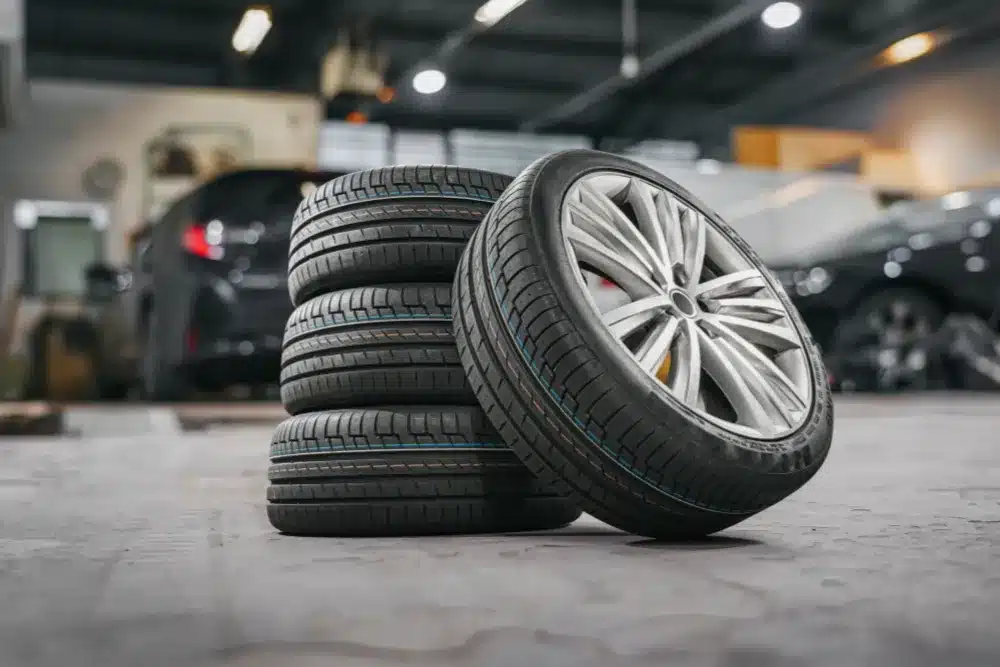
- Tread Area: Punctures in the center section that contact the road are typically repairable
- Sidewall: Any damage here cannot be safely repaired due to constant flexing
- Shoulder: The transition area between tread and sidewall is too unstable for repairs
- Bead: Damage near the rim edge compromises the tire’s seal
Size and Frequency Limits
Industry standards allow repairs for punctures up to one-quarter inch in diameter. Anything larger compromises the tire’s structural integrity, even with professional patching. Additionally, you can safely repair a tire once during its lifetime. If the same tire sustains a second puncture, replacement becomes necessary regardless of tread depth or tire age.
Clear Signs You Need New Tires in Southeast Missouri and Southern Illinois
Certain conditions tell you immediately that replacement is the only safe option:
- Sidewall Damage: Any cuts, bulges, or punctures in the sidewall create serious safety risks and cannot be repaired.
- Exposed Cords or Fabric: If you see threads, cords, or fabric showing through the rubber anywhere on the tire, it must be replaced immediately.
- Low Tread Depth: Use the penny test by inserting a penny into the tread with Lincoln’s head upside down. If you can see the top of his head, your tread is below 2/32 inch and is legally worn out.
Irregular Wear Patterns:
- Center Wear: Overinflation causing excessive center contact
- Edge Wear: Underinflation or aggressive cornering
- Cupping or Scalloping: Suspension problems creating bouncing wear
- One-Sided Wear: Alignment issues requiring correction
The Hidden Danger of Tire Age
Here’s something many drivers don’t realize: tire rubber naturally deteriorates over time, even when tread depth appears adequate. Heat, sunlight, and chemical reactions gradually break down the rubber compounds. Most manufacturers recommend replacing tires between six and ten years old, regardless of how they look. You can find your tire’s manufacturing date on the sidewall. Look for a four-digit code following “DOT.” The first two digits indicate the week, and the last two show the year. For example, “2218” means the 22nd week of 2018.
The Real Benefits of New Tires
Investing in new tires provides advantages that go beyond avoiding a flat. Fresh rubber compounds deliver measurable safety and performance improvements.
Safety Improvements
- Shorter Stopping Distances: New tires can reduce braking distance by several car lengths, especially in wet conditions. That extra space could be the difference in an emergency situation.
- Better Wet Weather Performance: Deep treads channel water away from the contact patch more effectively, dramatically reducing hydroplaning risk during rainstorms.
- Improved Handling Response: New tires restore your vehicle’s original steering feel and cornering stability with more precise control through turns.
Economic Advantages
- Fuel Efficiency: Modern tire designs reduce rolling resistance, improving gas mileage by up to 3%. Over thousands of miles, this adds up to real savings at the pump.
- Technology Upgrades: Today’s tires incorporate advanced features like reinforced sidewalls, noise-reducing foam, and longer-lasting tread compounds that weren’t available in older models.
How to Maintain Tires for Maximum Life
Simple habits protect your investment and help you identify problems early:
- Check Pressure Monthly: Underinflated tires wear 25% faster and reduce fuel economy
- Rotate Regularly: Follow your vehicle manufacturer’s recommended rotation schedule every 5,000 to 7,000 miles
- Inspect Before Trips: Look for cuts, bulges, or embedded objects before long drives
- Monitor Alignment: If your vehicle pulls to one side, get alignment checked immediately
- Clean Treads: Remove stones and debris that can work deeper and cause damage
Need a professional tire inspection? Our team at Charlie’s Tire and Fast Lube can assess your tire condition and provide honest recommendations. Visit us at any of our Perryville, Sparta, or Ste. Genevieve locations, or call 573-547-2004 (Perryville), 618-443-5300 (Sparta), or 573-883-8833 (Ste. Genevieve).
Professional Tire Services at Charlie’s
At Charlie’s Tire and Fast Lube, we provide complete tire care backed by honest recommendations and quality workmanship. Our team never pressures you into unnecessary purchases. We examine your tires thoroughly and explain your options clearly, helping you understand the reasoning behind our recommendations.
Expert Tire Repair
For damage that meets repair criteria, our technicians perform proper internal patch repairs. We follow industry best practices with combination patch-and-plug repairs applied from inside the tire, creating a permanent seal that maintains proper air pressure and structural strength.
Quality Tire Sales and Installation
When replacement is necessary, we offer an extensive selection featuring trusted brands:
- Bridgestone and Firestone: Premium quality with excellent warranties
- Goodyear: Proven durability for family vehicles
- Falken and Nokian: Outstanding performance and value
- Mickey Thompson: Ideal for trucks and off-road enthusiasts
Our professional installation includes mounting, balancing, and proper inflation to manufacturer specifications using our Hunter alignment equipment. We also handle tire disposal responsibly.
Full-Service Tire Care Across Southeast Missouri and Southern Illinois
Beyond repair and replacement, we provide tire rotation and balancing, wheel alignments using Hunter precision equipment, tire pressure monitoring system (TPMS) service, and seasonal tire changeovers.
FAQs About Tire Repair and Replacement
When should I repair a tire instead of replacing it?
You should repair a tire when the puncture is in the tread area, measures less than a quarter inch, and the tire has adequate remaining tread depth with no previous repairs. Damage to the sidewall or shoulder areas cannot be safely repaired and requires tire replacement.
Is it safe to drive on a repaired tire?
Yes, driving on a properly repaired tire is safe when the repair follows industry standards with an internal patch-and-plug combination. Professional repairs restore the tire’s structural integrity and can last for the remaining life of the tire.
How do I know if my tire damage is repairable?
Tire damage is repairable if it meets three criteria: location in the tread area only, size less than one quarter inch in diameter, and no previous repairs to the same tire. A professional inspection determines whether your specific damage meets these safety standards.
What are the benefits of buying new tires?
Buying new tires provides improved traction in wet and dry conditions, shorter stopping distances, better fuel efficiency, and restored handling performance. New tires also eliminate concerns about hidden damage or age-related deterioration that can compromise safety.
Where can I get tire repair or new tires near me?
Choose a tire service center that employs experienced technicians, follows industry repair standards, and carries quality tire brands from reputable manufacturers. Professional shops use proper internal patch-and-plug repair methods, provide honest assessments of whether damage is repairable, and explain your options clearly without pressure. Ask about their repair warranty, tire selection, and installation process, including mounting, balancing, and alignment capabilities.
How long do new tires typically last?
New tires typically last between 40,000 and 80,000 miles, depending on the tire quality, driving habits, vehicle type, and maintenance practices. Regular tire rotations, proper inflation, and wheel alignments help maximize tire lifespan and ensure even wear patterns.
Get Expert Tire Repair in Perryville & Ste. Genevieve, MO, or Sparta, IL
Wondering if you’re making the right call about your tires? Bring your vehicle to any of our Southeast Missouri or Southern Illinois locations for a tire inspection. Our experienced technicians will assess the damage, check your tread depth, and give you clear answers about whether repair makes sense or if new tires are the safer investment.
Plaza Tire Service (Soon to be Charlie’s) in Perryville
Visit Us: 1319 W St Joseph St, Perryville, MO 63775
Call Us: 573-547-2004
Plaza Tire Service (Soon to be Charlie’s) in Sparta
Visit Us: 1310 N Market St, Sparta, IL 62286
Call Us: 618-443-5300
Plaza Tire Service (Soon to be Charlie’s) in Ste. Genevieve
Visit Us: 210 Plaza Dr, Ste. Genevieve, MO 63670
Call Us: 573-883-8833
You can also visit our Charlie’s Tire Center locations in Jackson and Dexter for the same expert tire services and automotive care.
Charlie’s Tire Center in Jackson
Visit Us: 1901 E Jackson Blvd, Jackson, MO 63755
Call Us: 573-243-8481
Charlie’s Tire Center in Dexter
Visit Us: 414 N 1 Mile Rd, Dexter, MO 63841
Call Us: 573-614-7885
Family-owned and community-trusted for over 45 years. We look forward to keeping you and your loved ones safely on the road.