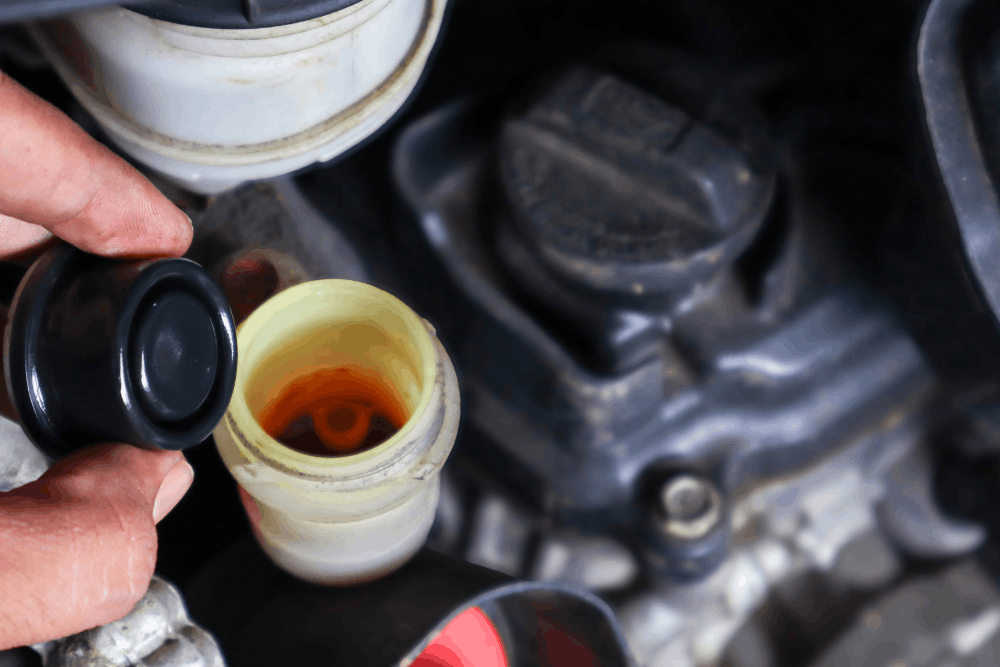
Brake fluid moisture contamination is one of the most overlooked threats to your vehicle’s braking system. When water works its way into your brake fluid, it quietly lowers the fluid’s boiling point, corrodes internal components, and can stretch your stopping distance at the worst possible moment. At Charlie’s Tire and Automotive in Sparta, IL, we help drivers throughout Randolph County and the surrounding Southern Illinois communities understand why regular brake fluid testing and flushing are essential parts of responsible brake maintenance. This blog covers how contamination happens, what it does to your brakes, and why staying ahead of it keeps you and your family safer on the road.
What Is Brake Fluid Moisture Contamination?
Brake fluid is a hydraulic fluid that transfers the force from your brake pedal through the brake lines to the calipers and wheel cylinders. For that system to work correctly, the fluid needs to stay clean, dry, and within a specific performance range.
The problem? Brake fluid is hygroscopic, meaning it naturally absorbs moisture from the air over time. Even in a sealed system, small amounts of water vapor can enter through rubber brake hoses, reservoir caps, and line fittings. It does not happen overnight, but it is happening continuously.
What Does Water Do to Brake Fluid?
Here is where it gets serious:
- Boiling point drops: Fresh brake fluid has a dry boiling point above 400 degrees Fahrenheit. Once moisture levels reach just 3 percent water content, that boiling point can fall by more than 100 degrees.
- Vapor lock risk: When brake fluid boils, it creates gas bubbles in the lines. Gas compresses easily; fluid does not. That means a spongy pedal, reduced braking force, or, in severe cases, a pedal that sinks to the floor.
- Corrosion starts: Water promotes rust and corrosion inside your ABS module, master cylinder, calipers, and brake lines. Those are expensive components to replace.
Why Does Brake Fluid Absorb Moisture So Readily?
Many drivers are surprised to learn that the very design of the brake system works against it here. Rubber hoses are slightly permeable to moisture over time. The reservoir cap is vented to prevent vacuum buildup, which also lets humid air in. Brake systems in vehicles driven in humid climates or through wet conditions face even faster moisture accumulation.
This is not a defect. It is a known characteristic of glycol-based brake fluids, which is why manufacturers build scheduled brake fluid replacement intervals into their maintenance recommendations.
The Moisture Percentage Problem
Think of it this way:
- At 1% water content, performance begins to degrade slightly.
- At 2% water content, the boiling point has dropped enough to notice under hard braking.
- At 3% water content, your brake fluid is well past the point of safe operation and corrosion is actively working against your system.
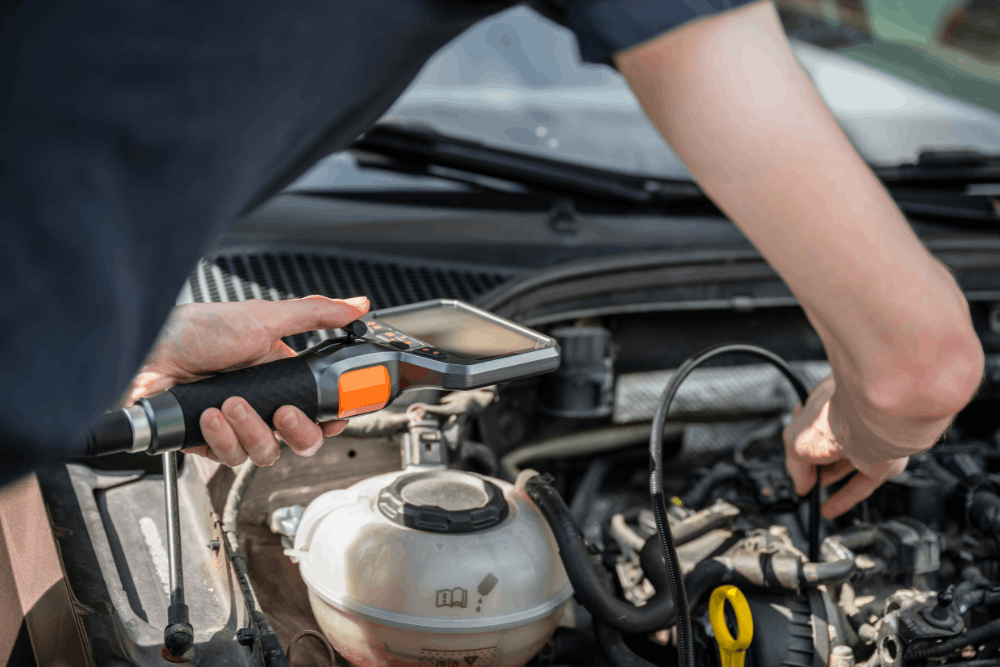
Most brake fluid test strips or electronic testers can measure moisture levels in minutes. It is a quick check that can save a much bigger repair bill down the road.
Signs Your Brake Fluid May Be Contaminated
Your vehicle will often give you signals before the brake system reaches a critical point. Watch for these warning signs:
- Spongy or soft brake pedal: Air or vapor in the lines from boiling fluid
- Brake pedal sinks closer to the floor than usual: Loss of hydraulic pressure
- Longer stopping distances: Reduced braking effectiveness, especially under heavy or repeated use
- Discolored brake fluid: Fresh fluid is light amber to clear; dark or murky fluid signals degradation
- Brake warning light on the dashboard: Can indicate low fluid or pressure irregularities
- Unusual noise or feel when braking: Corrosion inside calipers or cylinders affecting performance
If any of these feel familiar, it is time to bring your vehicle in for a brake inspection. Do not wait until a warning light turns into a brake failure.
Brake Fluid Testing and Flushing Services in Sparta, IL
Whether you’re driving in Sparta or coming in from the surrounding Randolph County communities, Charlie’s Tire and Automotive in Sparta, IL, provides professional brake fluid testing and brake fluid flush services to keep your braking system performing safely.
Our team checks fluid condition as part of every thorough brake inspection, so you always know exactly where your brake system stands before a problem develops.
A brake fluid flush is straightforward: the old contaminated fluid is removed from the system, and fresh fluid is installed throughout. This restores hydraulic pressure, raises the boiling point back to spec, and stops corrosion from spreading to components like your ABS module and master cylinder.
Most manufacturers recommend a brake fluid flush every 2 to 3 years or roughly every 30,000 to 45,000 miles, though your vehicle’s owner manual will have the specific interval for your make and model.
Ready to schedule your brake maintenance? Stop in at Charlie’s Tire and Automotive in Sparta, IL, or see the closing section for the full address and phone number.
What a Complete Brake Inspection Covers at Our Missouri and Illinois Locations
Here is something most drivers do not think about: a brake fluid check is part of a complete brake inspection, not a separate service. When you bring your vehicle to any Charlie’s Tire and Automotive location, our team evaluates the whole picture.
A thorough brake inspection covers:
- Brake fluid condition and moisture level testing
- Brake pad thickness: Worn pads increase heat load on the fluid
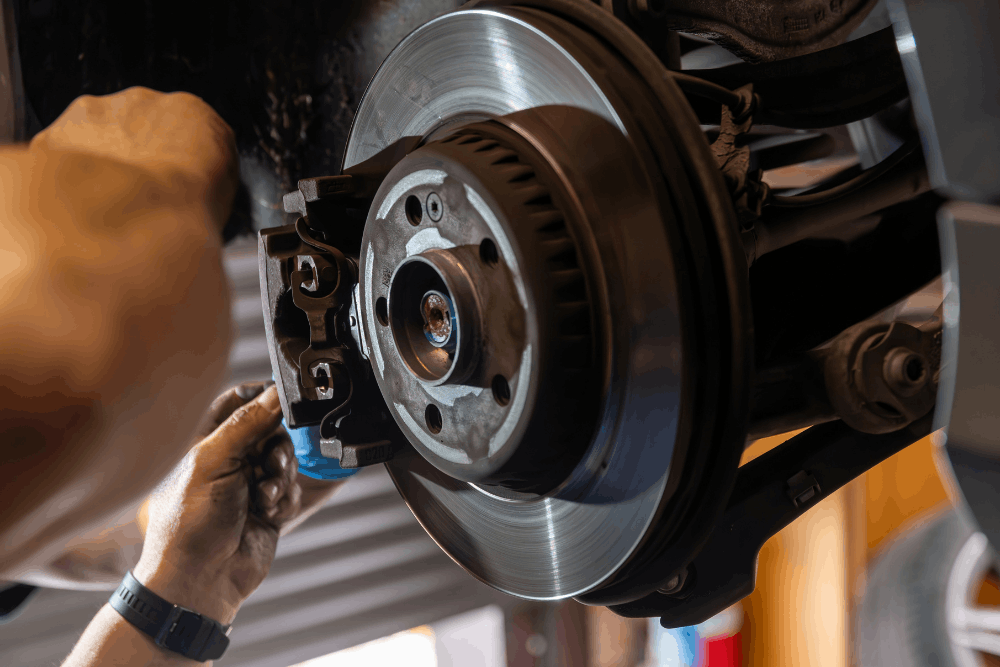
- Rotor condition: Scoring, warping, or minimum thickness checks
- Caliper function: Seized calipers cause uneven wear and add heat to the system
- Brake lines and hoses: Checking for cracks, swelling, or corrosion
- Master cylinder and reservoir: Inspecting for leaks or contamination entry points
Catching a problem in one area often reveals why another area is wearing faster than it should. That is the kind of honest, complete assessment our customers have come to expect from a family-owned shop that has been serving Southeast Missouri and Southern Illinois since 1980.
Why Routine Brake Maintenance Matters for Sparta, IL Drivers
Drivers in Sparta, IL, and throughout Randolph County put real miles on their vehicles every week. Whether you’re commuting, hauling, or running the family around, your brakes are working hard in all weather conditions. Moisture contamination accelerates in humid summers and wet fall seasons, which Southern Illinois sees plenty of.
At Charlie’s Tire and Automotive, we see brake systems that have gone too long between fluid services. The pattern is consistent: corroded calipers, a spongy pedal, and brake pads that wore unevenly because the fluid wasn’t transferring pressure correctly.
Routine brake fluid testing is a simple, low-cost way to avoid those outcomes. It’s the kind of preventative care that keeps a small maintenance item from turning into a full brake repair.
Why Charlie's Tire and Automotive Is the Right Choice for Brake Services
Charlie’s Tire and Automotive has been built on the same values since 1980: honest service, genuine care for every customer’s vehicle, and a team that treats people like family rather than an appointment number. “Built on Family. Driven by Service.” is not just a slogan here. It is how we approach every brake job across all five of our locations.
- Family-owned for over 45 years: Accountability and trust run through everything we do
- Thorough brake inspections: We check the full brake system, not just the pads
- Experienced team: Technicians who explain what they find in plain language, not technical jargon
- Financing available: CFNA and Koalafi financing options available for qualifying customers
- Five convenient locations: Serving drivers across Southeast Missouri and Southern Illinois
FAQs About Brake Fluid and Brake Services
What is brake fluid moisture contamination?
Brake fluid moisture contamination occurs when water vapor is absorbed into the brake fluid over time, lowering its boiling point and reducing hydraulic performance. This is a natural process in glycol-based brake fluids and is why routine fluid testing and replacement are recommended.
Why does brake fluid absorb moisture?
Brake fluid absorbs moisture because glycol-based fluids are hygroscopic by nature, meaning they attract and retain water. Moisture enters through permeable rubber hoses, vented reservoir caps, and brake line fittings during normal vehicle operation.
How often should brake fluid be replaced?
Most manufacturers recommend replacing brake fluid every 2 to 3 years or every 30,000 to 45,000 miles, depending on the vehicle. Always check your owner’s manual for the specific interval, as driving conditions and fluid type can affect replacement frequency.
What happens if contaminated brake fluid is not changed?
Contaminated brake fluid continues to absorb more moisture, accelerating corrosion in the master cylinder, calipers, ABS module, and brake lines. Over time, this reduces braking effectiveness and can lead to expensive component failures that go far beyond a standard fluid flush.
Where can I get a brake fluid flush in Sparta, IL?
For a brake fluid flush near you in Sparta, IL, bring your vehicle to Charlie’s Tire and Automotive at 1310 N Market St, Sparta, IL 62286. The team there performs complete brake inspections and brake fluid flush services to help keep your brakes performing safely.
Schedule Your Brake Fluid Service in Sparta, IL Today
Your brakes protect everyone in the vehicle. Moisture contamination doesn’t announce itself with a loud noise or a sudden warning. It works quietly until the damage is already done. If it’s been a few years since your last brake fluid flush, or you’ve been noticing a softer pedal than usual, don’t put it off any longer.
Charlie’s Tire and Automotive in Sparta, IL: 1310 N Market St, Sparta, IL 62286 | (618) 443-5300
Also serving drivers at four additional locations across the region:
- Jackson, MO: 1901 E Jackson Blvd, Jackson, MO 63755 | (573) 243-8481
- Dexter, MO: 414 N 1 Mile Rd, Dexter, MO 63841 | (573) 614-7885
- Perryville, MO: 1319 W St Joseph St, Perryville, MO 63775 | (573) 547-2004
- Ste. Genevieve, MO: 210 Plaza Dr, Ste. Genevieve, MO 63670 | (573) 883-8833
Built on Family. Driven by Service. Sparta drivers have trusted Charlie’s Tire and Automotive for over 45 years, and that same honest, dependable brake service is ready for you.